
Slipper Making Raw Material Guide: PVC vs EVA — What Should You Use? (2026)
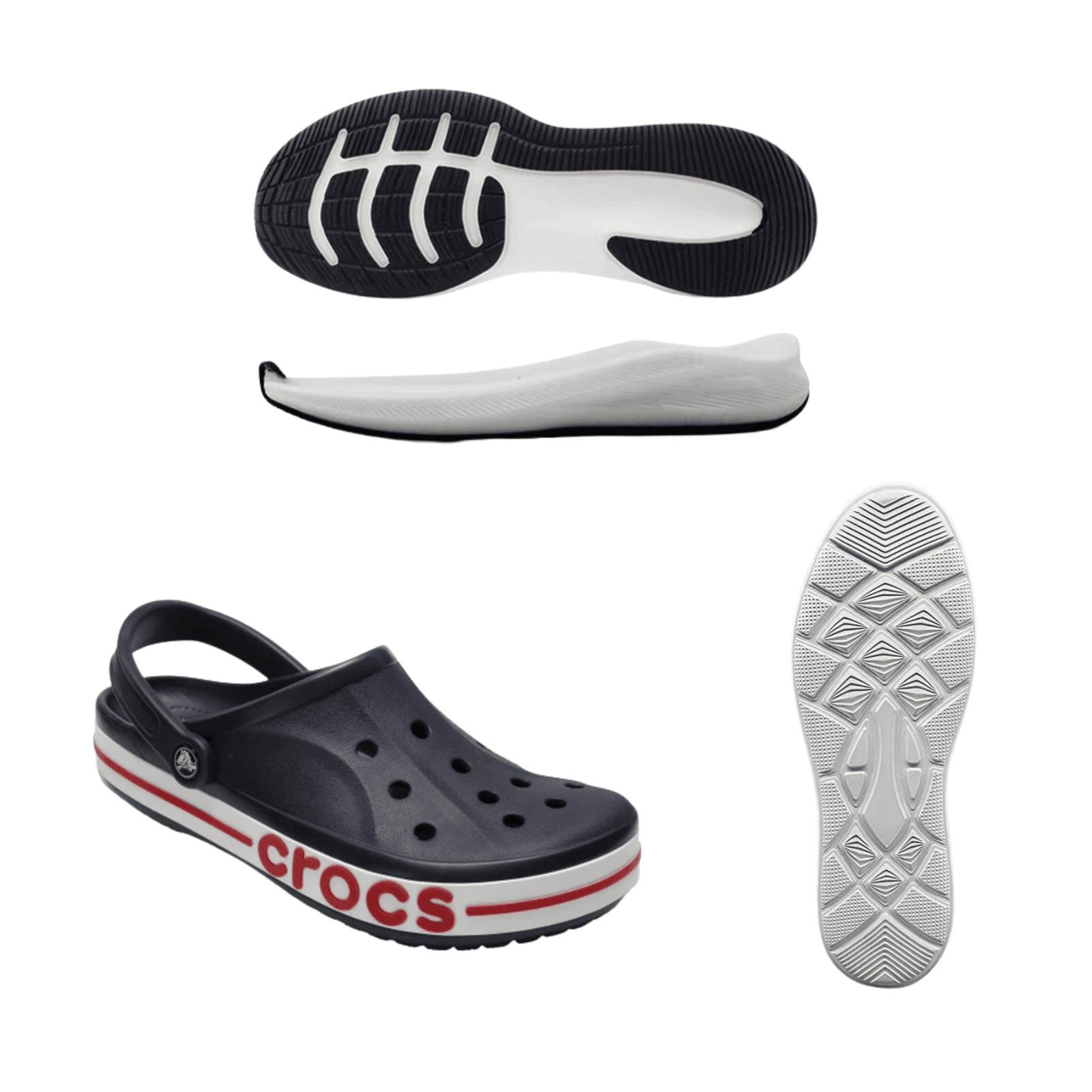
Every slipper manufacturing decision starts with one choice that most guides skip: the raw material. PVC or EVA decides your product's look and feel, your cost per pair, your machine, and which market segment you can sell into. Here's the practical guide.
The Two Materials That Dominate Slipper Manufacturing
PVC (Polyvinyl Chloride) compound — the workhorse of Indian slipper production. Supplied as compound/granules, processed on air-blowing injection machines that foam the material into light, cushioned soles. PVC air-blown soles are what most everyday slippers and sandals in India are made of.
- Feel: soft, cushioned (air-blown), good surface finish
- Cost: the most economical route to a finished pair
- Colours: excellent — single, double, even triple colour moulding
- Machines: rotary air-blowing injection (TECHROT-20/24)
EVA (Ethylene Vinyl Acetate) granules — the lightweight premium option. EVA is dramatically lighter than PVC, with a springy, flexible feel — it's the material of clogs (croc-style footwear), premium slippers and phylon midsoles.
- Feel: very light, soft, flexible; floats on water
- Cost: higher per kg than PVC, but low density means fewer grams per pair
- Look: matte, modern; takes bright colours well
- Machines: EVA injection (TECHEVA) for clogs and one-piece footwear; EVA hot & cold presses (EVA-HC / TLEHC) for phylon
PVC vs EVA at a Glance
| Factor | PVC (air-blown) | EVA |
|---|---|---|
| Weight | Moderate | Very light |
| Feel | Cushioned, smooth | Springy, soft |
| Cost per pair | Lowest | Moderate |
| Typical products | Everyday slippers, sandals | Clogs, premium slippers, midsoles |
| Multi-colour | Excellent | Good |
| Machine | Rotary air-blowing injection | EVA injection / hot & cold press |
What About Rubber and TPR?
Rubber remains the material for heavy-duty soles (moulded on hydraulic presses like the TECHRUB-6), and TPR dominates shoe soles rather than slippers — if your product line extends to shoes, see our full material comparison: TPR vs PVC vs TPU vs PU.
Where Do You Buy Raw Material?
PVC compound and EVA granules are widely available from Indian compounders and importers — and this is one place a machinery partner earns its keep beyond the machine. We routinely connect new manufacturers to proven raw-material suppliers as part of installation and training, so your line starts with material that runs well on your machine, not trial-and-error batches. Get in touch and we'll help you source it.
The Decision in One Paragraph
If you're entering the volume slipper market — everyday chappals and sandals sold on value — start with PVC air-blown on a rotary machine: lowest cost per pair, proven demand, multi-colour capability. If you're targeting the growing lightweight/clog segment or premium retail, EVA injection is your material. Many factories eventually run both — the machines are different, so the material decision is really a machine decision. See our full chappal & slipper sole machines guide to match your material choice to a machine.
Still finalising your production plan — space, power, investment? See our step-by-step guide to starting a slipper and chappal manufacturing business.
Quick answers
What raw material is used for slipper making?
Mainly PVC compound (air-blown soles — everyday slippers and sandals) and EVA granules (lightweight clogs and premium slippers). Rubber is used for heavy-duty soles.
Which is better for slippers — PVC or EVA?
PVC air-blown gives the lowest cost per pair for volume markets; EVA gives a much lighter, springier product for premium and clog-style footwear. The choice decides your machine.
Where can I buy PVC compound or EVA granules in India?
From Indian compounders and importers nationwide. We connect our machine clients to proven raw-material suppliers during installation so production starts with material matched to the machine.