
How to Start a Slipper & Chappal Manufacturing Business in India (2026)
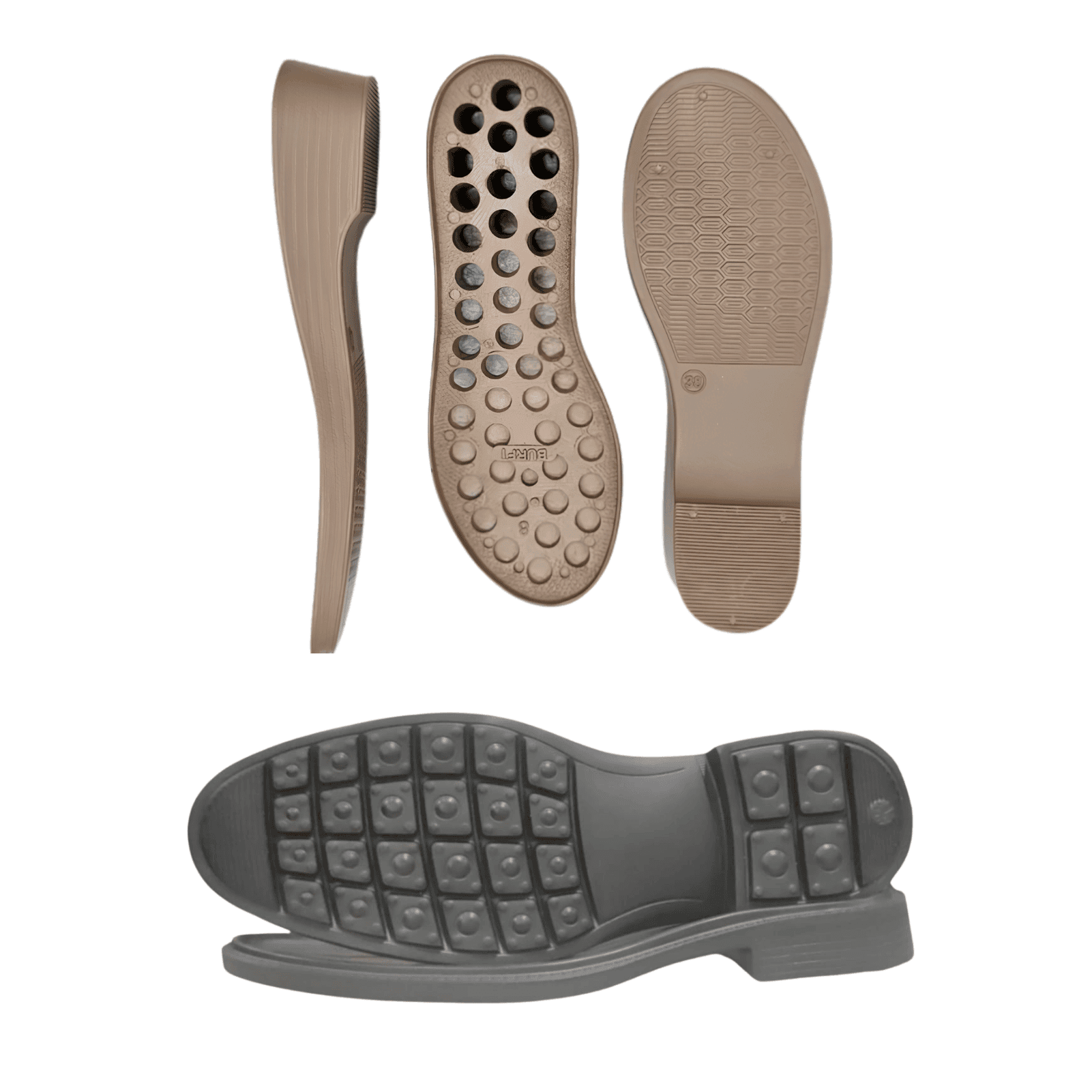
India buys hundreds of millions of pairs of slippers and chappals every year — and most of them are made not by giant corporations, but by focused manufacturers running efficient factories in clusters like Bahadurgarh, Agra, Narela and Kanpur. If you're planning to enter this business in 2026, this guide walks through what production actually involves: the process, the machines, raw material, space, power, and the questions to answer before you invest.
First, Understand What You'll Actually Be Making
A finished slipper or chappal has two parts: the sole (the moulded PVC, EVA or rubber base) and the upper/strap. The sole is where the real manufacturing happens — it's moulded on injection machines at factory scale. Straps and assembly are comparatively simple operations.
This distinction matters because it defines your machinery decision. Small cottage units buy hand-operated sheet-cutting machines and cut soles from ready-made rubber sheets — low investment, low output, and products that compete only on price. Factory-scale manufacturers mould their own soles on automatic machines — higher investment, dramatically higher output, and a product they control end to end. See our sole making machines for chappal & slipper manufacturers.
The Production Process, Step by Step
- Raw material preparation. PVC compound or EVA granules are the base. Material choice decides your product segment (covered below, and in detail in our raw material guide).
- Sole moulding. The granules are heated and injected into sole moulds on an automatic machine. A rotary air-blowing machine like the TECHROT-20 produces 130–180 pairs of air-blown PVC soles per hour with one operator.
- Strap fitting / upper assembly. Straps (often bought ready or made on simple equipment) are fitted to the moulded soles.
- Finishing, packing, dispatch.
The moulding step is the heart of the factory — it decides your output, your quality, and your cost per pair.
Which Machines Do You Need?
For a sole-moulding line producing slippers and sandals, manufacturers typically run:
- Rotary air-blowing injection machines (like TECHROT-20 / TECHROT-24) for air-blown PVC soles — the classic slipper and sandal sole, produced at 130–180 pairs/hour.
- EVA injection machines (like TECHEVA) for EVA slippers and clog-style footwear.
- Ancillary equipment — chillers, hopper driers, granulators — that keep the line running efficiently.
A "full set" for slipper production means the moulding machine plus moulds (per design/size), a chiller, and basic material handling. When you see "slipper making machine full set price" quoted anywhere, always confirm exactly what the set includes — mould count is usually the difference between quotes.
Space and Power: The Practical Constraints
A single rotary line typically needs a few hundred square metres of covered space including material storage and packing. Power is the constraint most new manufacturers underestimate — connected loads for rotary machines run 21–31 kW and up. The good news: machines can be engineered around real-world power limits. We've fitted VFD drives that let a client run four machines on a single 50 kW connection — the same client who started with one machine in a rented 2,250 sq ft unit and is today the largest TPR sole manufacturer in Bahadurgarh.
How Much Investment Does It Take?
It depends on your target output and material. A single-station entry setup is the most accessible starting point; rotary lines scale up from there. Rather than publish a number that will mislead in either direction, our approach is to map your target production to the right machine configuration and give you an itemised quotation — machine, moulds, ancillaries, installation — within 24 hours on WhatsApp. Indicative ranges for each machine category are on our FAQ page.
The Honest Question: Cottage Scale or Factory Scale?
If your plan is a hand-press and ready-made sheets, your investment is small — and so is your ceiling. You'll compete with every other cottage unit on price alone, and buyers will ask only one question: "what's your rate?"
Factory-scale sole moulding changes that equation: your cost per pair drops, your quality becomes consistent, and you can supply brands and wholesalers who need volume. Most of India's successful slipper manufacturers made exactly this jump — often starting with one machine. See our customer stories.
Getting Started
The practical first step isn't buying a machine — it's defining your product (PVC air-blown slippers? EVA clogs? sandals?), your target output per day, and your available power. With those three answers, the machine configuration follows logically. Send us those three details on WhatsApp and we'll map the line for you — machines, moulds, ancillaries, space and power requirements, and training — the same way we've done for 650+ factories since 1992.
Quick answers
How much does it cost to start a slipper manufacturing business in India?
It depends on output target and material. A single-station setup is the most accessible entry; rotary lines scale from there. Send your target production on WhatsApp and we'll give you an itemised quotation within 24 hours — indicative machine ranges are on our FAQ page.
Which machine is used to make chappals and slippers?
The sole is moulded on automatic injection machines — rotary air-blowing machines (TECHROT-20/24) for air-blown PVC soles, and EVA injection machines (TECHEVA) for EVA slippers and clogs. Straps are fitted after moulding.
What raw material is used for slipper making?
Primarily PVC compound (air-blown soles) and EVA granules (lightweight soles and clogs). See our full raw material guide.
How many pairs can a slipper making machine produce per hour?
A rotary air-blowing machine produces roughly 130–180 pairs of soles per hour depending on stations and design.